
Mountain Race Team | Тренировки
25 февраля 2026
Interview with skimo athlete Nikita Filippov after winning a silver medal at the 2026 Winter Olympics

An Olympic medal is an event that becomes forever etched in the history of sport and in the legacy of an individual athlete. For Russian ski mountaineering, this is a historic result. For Nikita Filippov, it is the culmination of a journey built step by step together with his father and team. We spoke about the final stage of that journey, race tactics, “lactate” efforts, skins without wax, and what comes next.
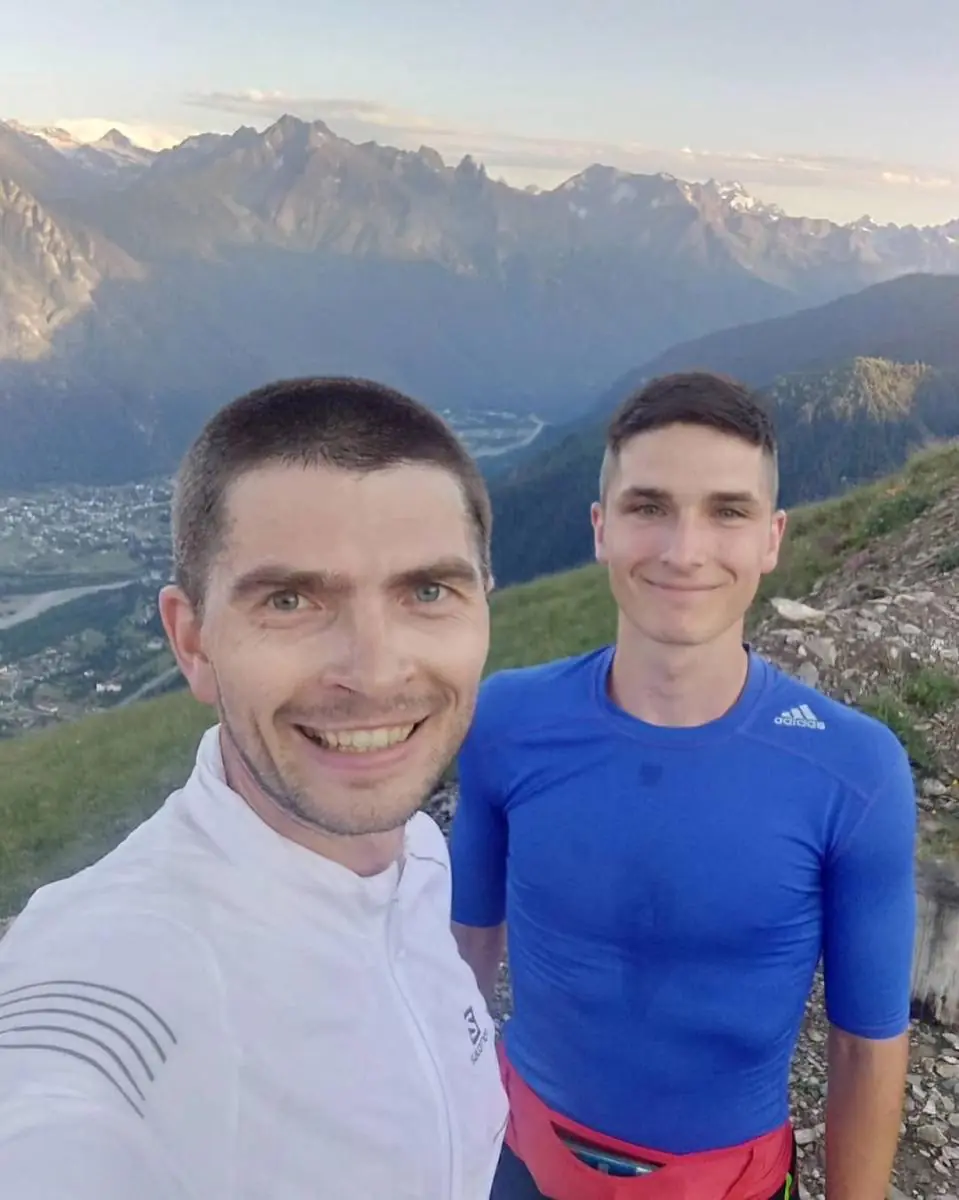
Personal archive. Teberda, Russia, summer 2021
Nikita, to be honest I find it very hard to put aside my personal emotions and feelings about your outstanding achievement! I don’t think I’ve ever cheered so intensely in front of a screen, and I experienced your Olympic medal as something deeply personal and truly incredible. It’s amazing to realize that for so many years, together with your father and your team, you were literally building this path — from childhood toward a single goal. And there it is: incredibly difficult, at times almost out of reach — and you achieved it against all odds. It’s inspiring, it’s awe-inspiring, and those Olympic steps not once will appear in our dreams at night. Dear Nikita, congrats!
— Thank you! The first couple of days after the race I could hardly believe that it was my medal. I could barely wrap my head around the fact that I had actually won silver. Then all those years of training started coming back to me. Before the start, I even went through my photos and videos with music — motivating myself, reminding myself of all the work I’d put in.
What was the first thought you woke up with on the morning of the race? And what time did you manage to fall asleep the night before?
— I actually fell asleep without any trouble. Of course, the thought crossed my mind: “Damn, it’s the Olympics tomorrow — the start of a lifetime,” and here I am just sleeping casually. But everything went fine, no issues. I didn’t nap during the day, so I fell asleep almost immediately at night — around 11:00 p.m., just as planned.
In the morning, I tried to push away any unnecessary thoughts. There weren’t many. The mantra was simple: I need to get the job done, just endure for one day — and then enjoy it for the rest of your life.
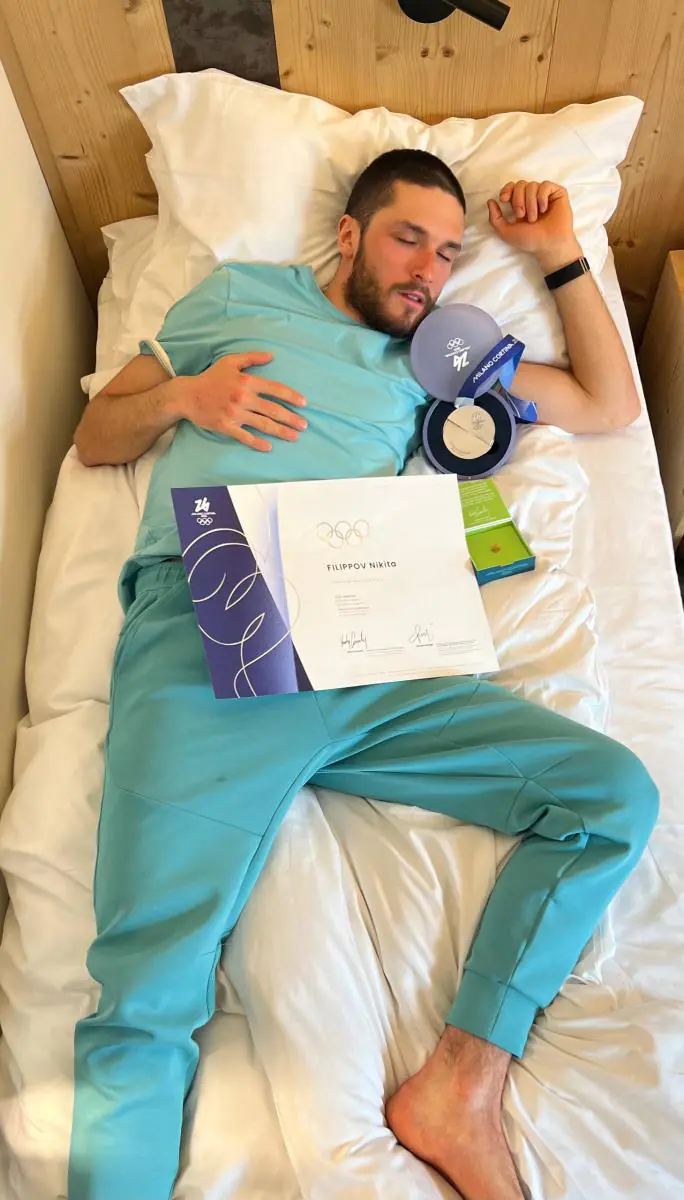
Visualisation even at nighttime
In the qualification you were a confident leader; in the semifinal I thought my heart would jump out of my chest; but the final… You weren’t in the top three off the start. Was that tactics, fatigue, or did the guys just go all-out?
— In the final, the guys really went all-out. They had the same plan as I did — to get to the “diamonds” first. I didn’t manage to slot in first; they were a bit faster. After that, I just raced according to the situation. I didn’t expect it to unfold like that, because you have to switch very sharply to the “bootpack” section. But I managed it, and the guys dropped back a bit. In the end, it didn’t quite go according to my original plan.
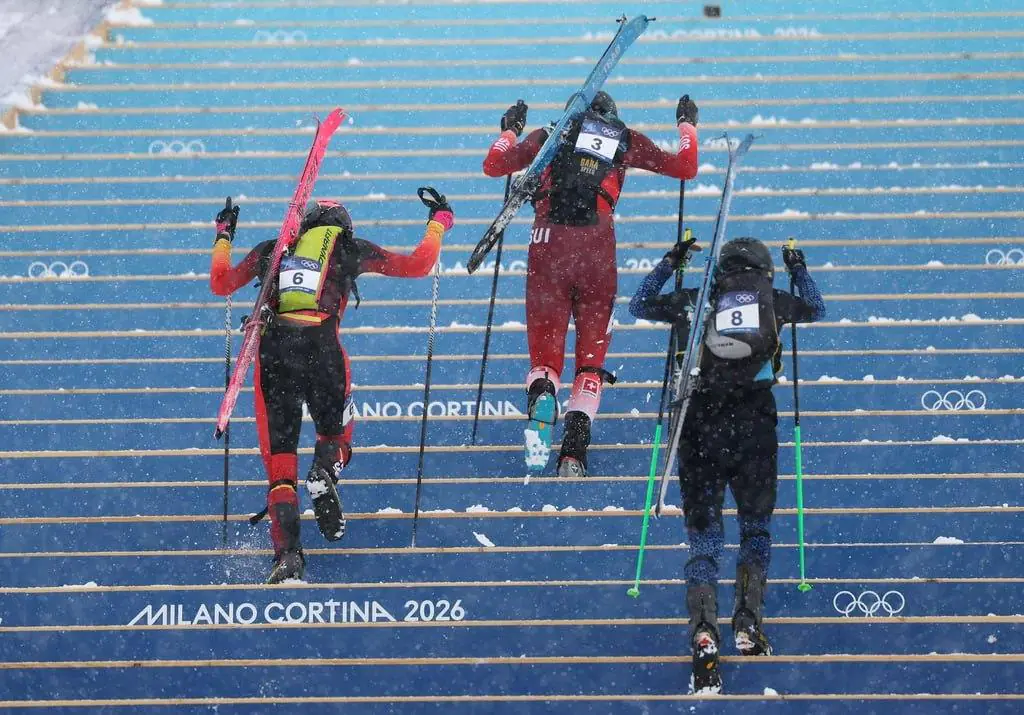
A question many people have: are the height and number of those steps standardized? Do you usually train on the same kind of setup?
— The steps are always different. Sometimes the course is set without them, sometimes with steps. About a year ago here in Bormio there were similar ones, but it all depends on the gradient. We train on a variety of step setups.
We were shocked by your rivals’ crashes, but before we could even catch our breath, that was exactly when you broke away. It felt like the lactate and the intensity were off the charts. At what moment did you realize this was your chance and that you wouldn’t let it slip?
— When the crashes started, I realized there was a chance. But I stumbled as well. In races like this, everything is decided at the top — you can easily get “stopped” there, like Arno did, and just as easily be overtaken. Until the very end, there was no complete certainty.
The snowfall… When I turned on the broadcast, I felt like it is going to be your day. How often have you faced these kinds of conditions in races or training? You looked very confident technically, not to mention your physical form.
— I’d never raced in snowfall like that before. And honestly, I hadn’t even thought about it. It’s great that it worked out this way. Technically, a lot depends on stability— especially during transitions. If you’re stable, both technically and emotionally, it makes a big difference.
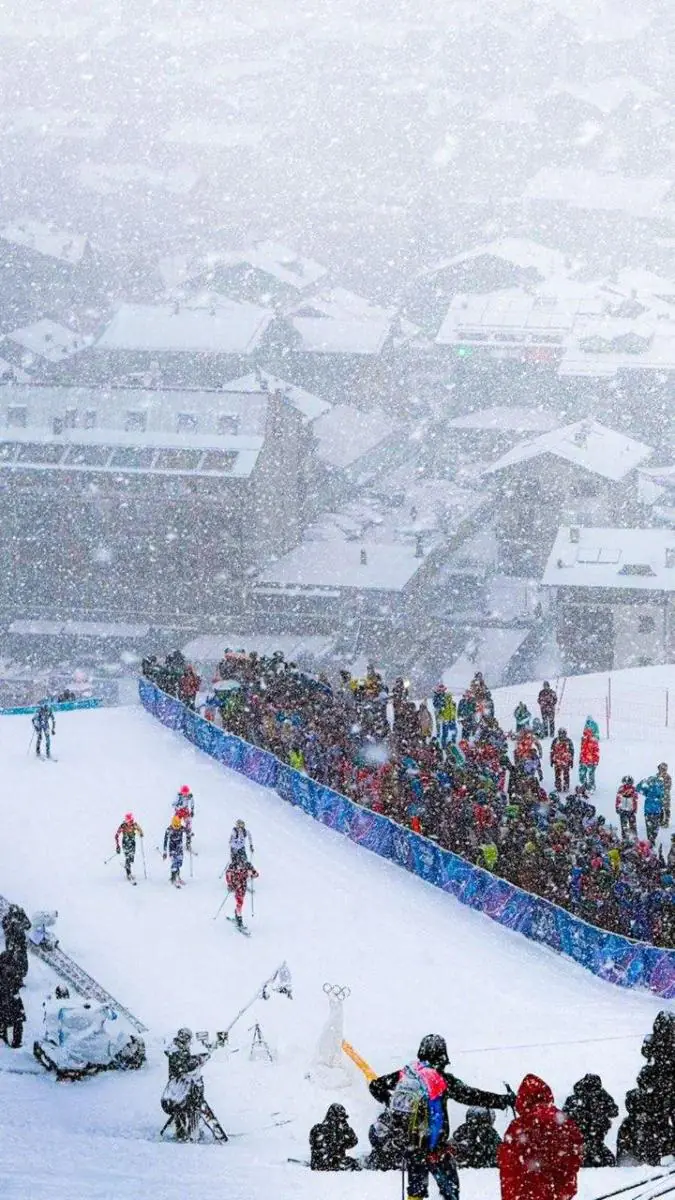
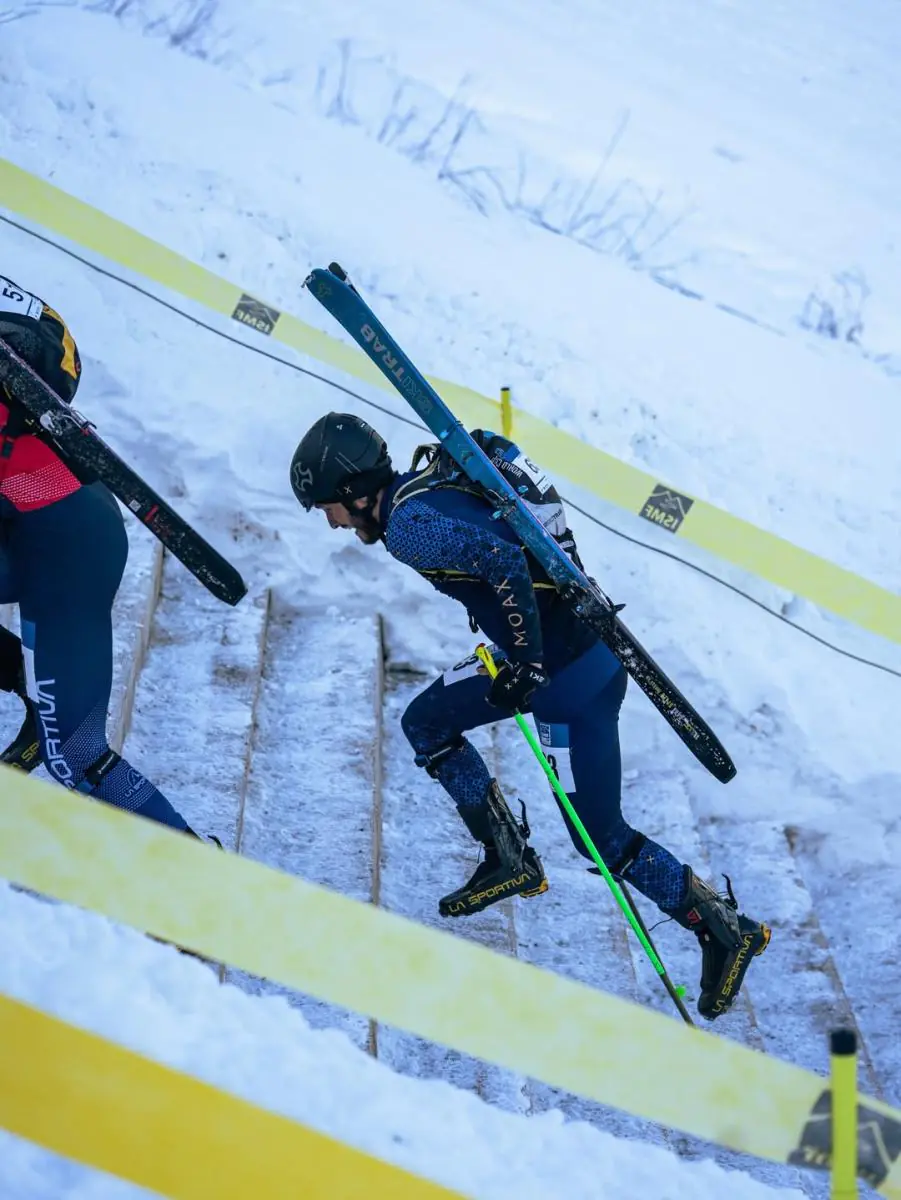
The gear of Olympic medalist in action. Photo Arthur Bdc
How did the gear perform? We were worried about a repeat of the binding issue that happened with the Slovak athlete, who was a clear contender…
— The gear worked out well. We got a bit lucky because the snow kept clogging, but there were no problems.
What did you have in your backpacks according to Olympic rules? Is everything standardized — did you carry a beacon, probe, shovel, or some other Olympic sprint kit?
— For the sprint, avalanche gear isn’t required. There was no mandatory kit. Goggles, helmet, gloves, skins — that’s obvious. I put a jacket in my backpack for volume. Usually people put foam or balls for volume, but I stick with the old-school jacket.
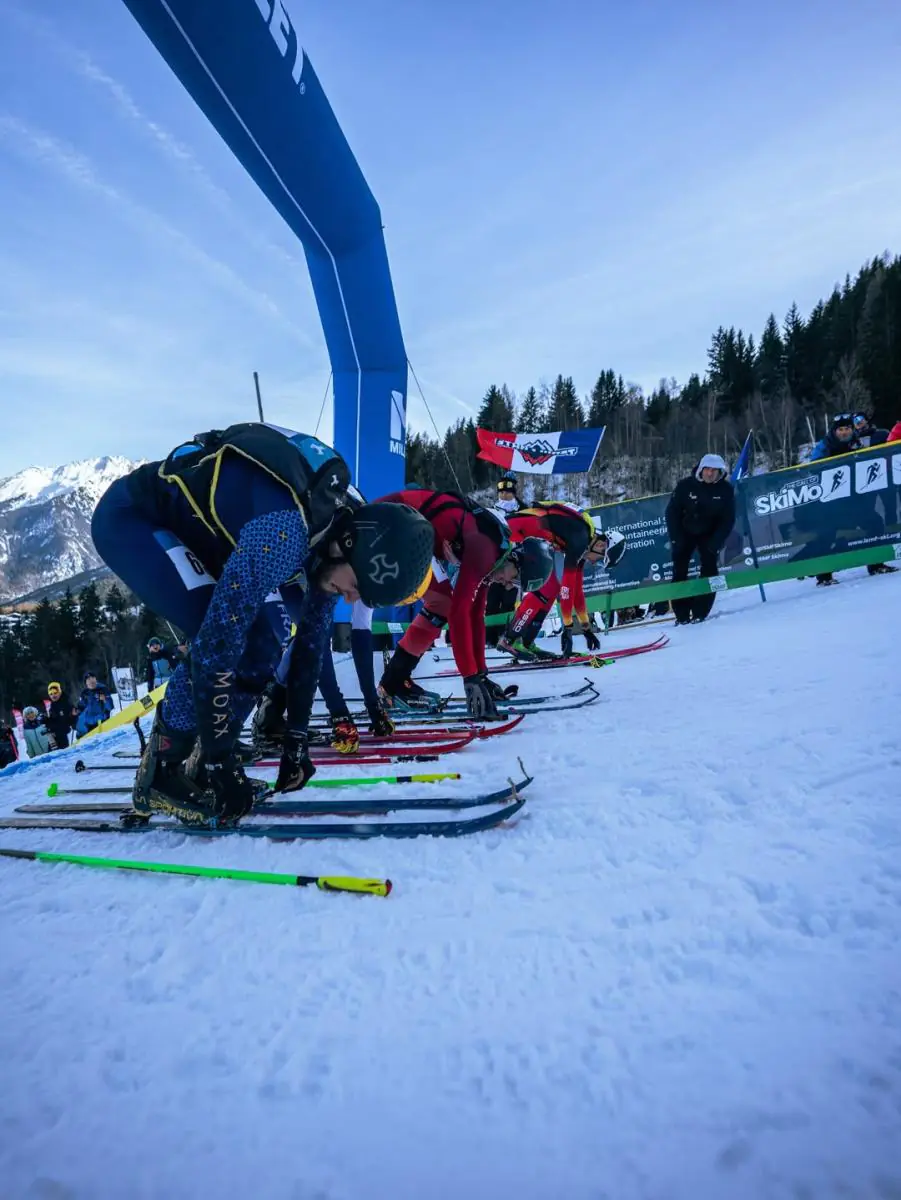
A lot, if not everything, is defined on the transitions
On the descent, what were the chances you could have caught up — or been caught? You left the transition with a 5-second gap, but in the end it was only 1.5 seconds to Oriol… How did the skis glide on that snow? Could you really go faster, or was that the speed ceiling in those conditions?
— There, ski glide mattered more than skill. The descent wasn’t very steep, and the turns were wide. Overtaking was difficult.
And then the finish… Nikita, we saw you standing there in shock. But we knew you were mentally ready for a medal. What was going through your mind in that moment? Did all those years of work flash before your eyes?
— At first, I didn’t fully realize it was silver. It was hard to process for the first couple of days. Then all those years of training started coming back.
How many transitions do you do in a day to reach that kind of speed? Which part is your favorite?
— I can’t say exactly how many transitions I do in a day; the trainings vary. In one transition-focused session, I can do around 100 repetitions.
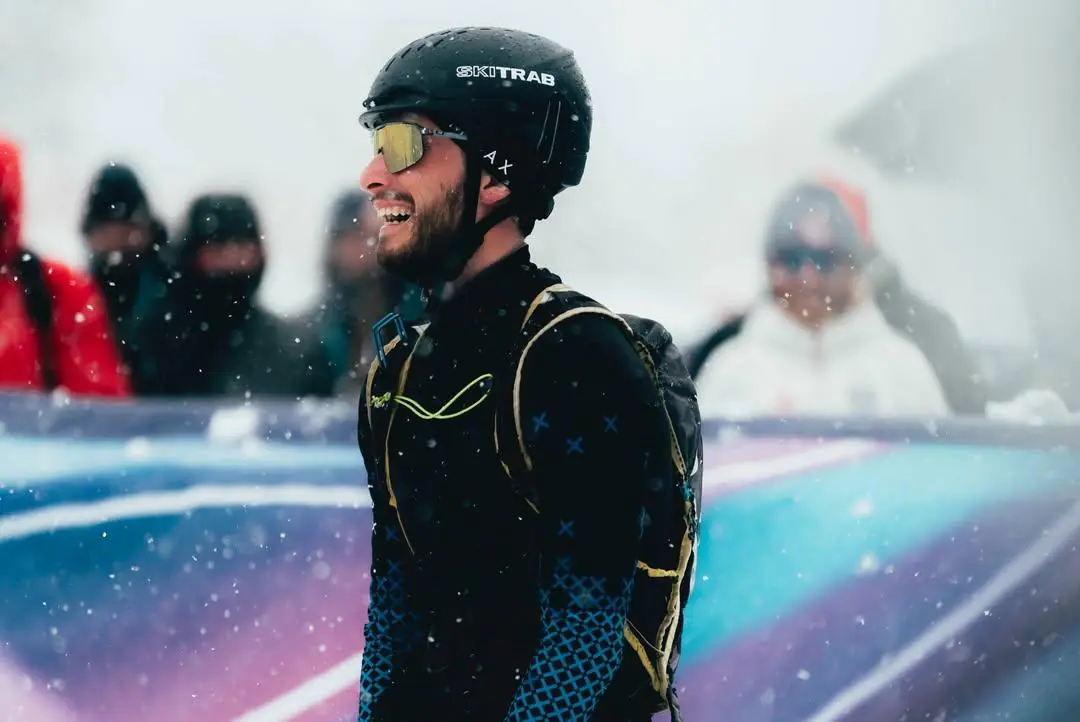
The first seconds...
During training, which stage did you focus on the most? Where was the biggest room for improvement?
— We focused mostly on speed, power, speed endurance, and technique, as well as core strength to stay stable without unnecessary wobbling. The main area for growth was speed for the sprint. We didn’t train as all-rounders — we honed everything specifically for the sprint.
Now it seems like you executed everything perfectly —truly elite Olympic level. But do you yourself see any mistakes?
— Yes. If I had been first into the “diamond,” it would have been an advantage. Then I stumbled and didn’t execute the transition perfectly, and clipped into the binding poorly.
Did you use a heart rate monitor during the races? I’m not asking about lactate — that was probably over 20! I saw athletes with watches, but I’m sure you didn’t have time to press buttons to record anything.
— I don’t use a heart rate monitor in competitions. Only for very long races that aren’t super important. I go by feel.
What about the pre-race dinner and breakfast — what did that look like?
— Dinner was rice with tomato paste. In the morning, a plain porridge cooked in water. I just poured in boiling water. Good, solid oatmeal.
What’s your racing weight right now?
— Racing weight is 70 kg. I was a bit worried it might be too much. Last season it was 68, but I gained a bit of muscle for the sprint. More or less lean, sinewy, not much fat — probably optimal now.
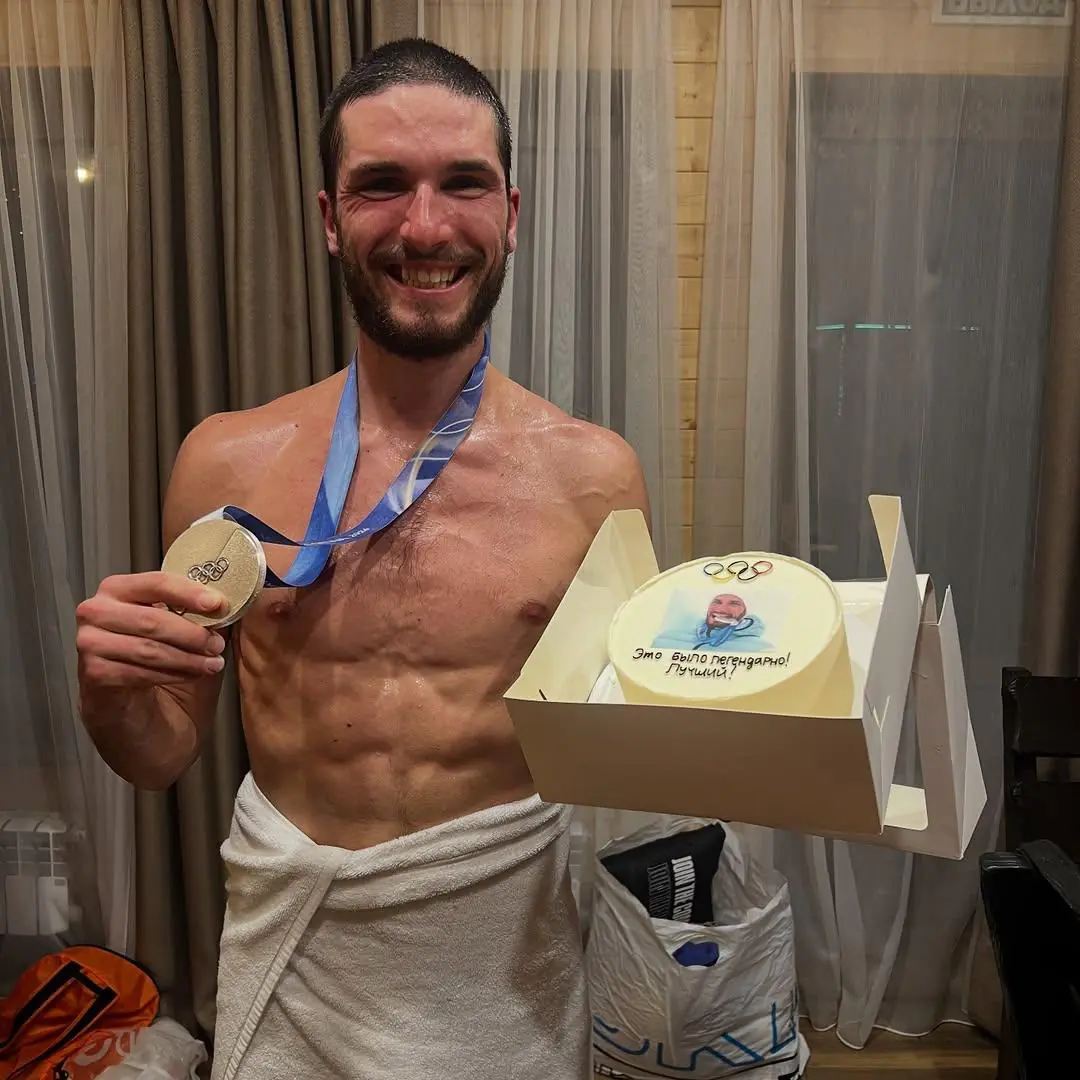
Nikita’s body fat percentage is approaching singularity… the result of an Olympic-level diet
When was your VO₂ max last measured, and what was it?
— About a year and a half ago it was 87. In the summer, around 82. Now it’s roughly 80.
What’s doping control like these days, and how long does it take?
— It’s all pretty routine and quick now. They take urine and blood samples. Before the Olympics, I was tested 2–3 times over a week to ten days, and once more afterward. The whole procedure takes about 20 minutes.
23 years old… silver medal. Nikita, you do realize what awaits you at the next Olympics? Do you have a sense of how to maintain your form over such a long period in such a technical sport? After all, no one really has experience — this was first Olympics ever, and usually ski-mo athletes live from one World Cup to another, and from national championship to national championship in different ski mountaineering disciplines.
— Yes, of course I have an idea. I’m not thinking so much about maintaining as about growth. I’m young, I have reserves and potential. I believe there’s still a lot ahead.
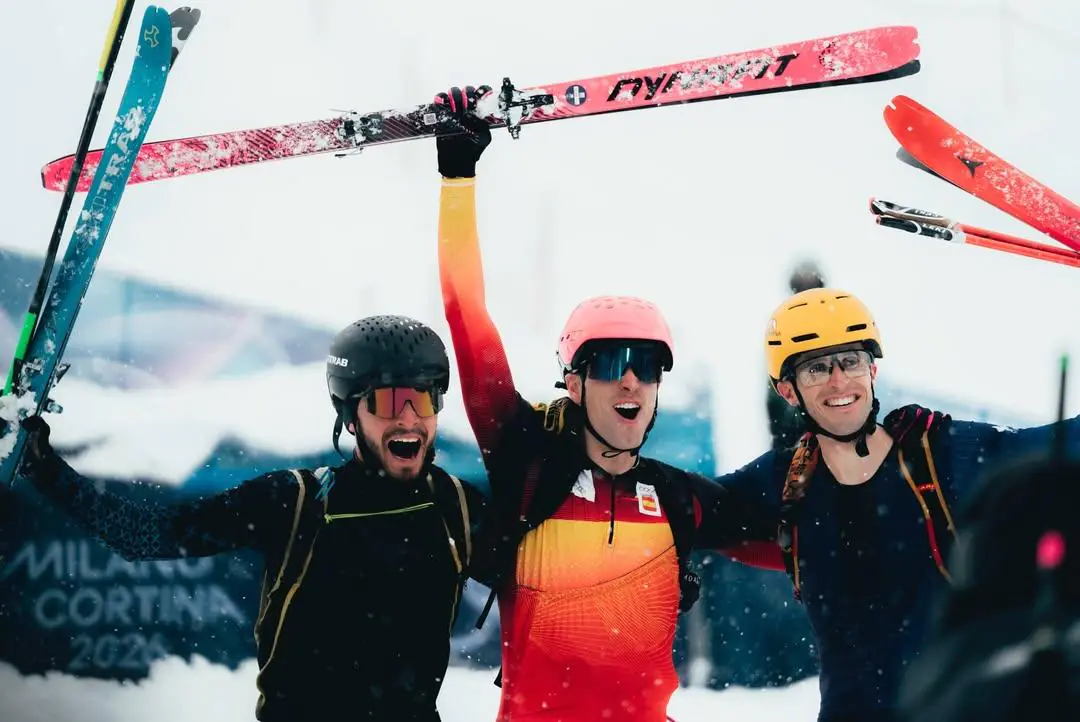
Nikita Filippov, Oriol Cardona Coll, Thibault Anselmet — the first-ever Olympic medalists in Ski Mountaineering. Photo – ISMF
Do you think Oriol Cardona will be able to qualify at 35 for the next Olympics? How long do you think the age gap between you two won’t affect a potential gold? Right now it’s obvious you’re not giving him any advantage, but there will come a time when you’ll simply outperform him because of age…
— I don’t know, I think he’ll keep his motivation. I believe he’ll 100% qualify if he wants to. The only factor for him is motivation after winning gold — whether he’ll even want to compete.
You guys have a very small elite circle. Outside of Strava, how much do athletes share training practices with each other? Do you and your coach adjust your training plan based on their practices and results throughout the season?
— There aren’t really any secrets. Preparation is more or less similar for everyone: you just work hard. The nuances make the difference.
“The more we are limited, the more it fires us up and makes us want to prove that nothing can stop us from winning.”
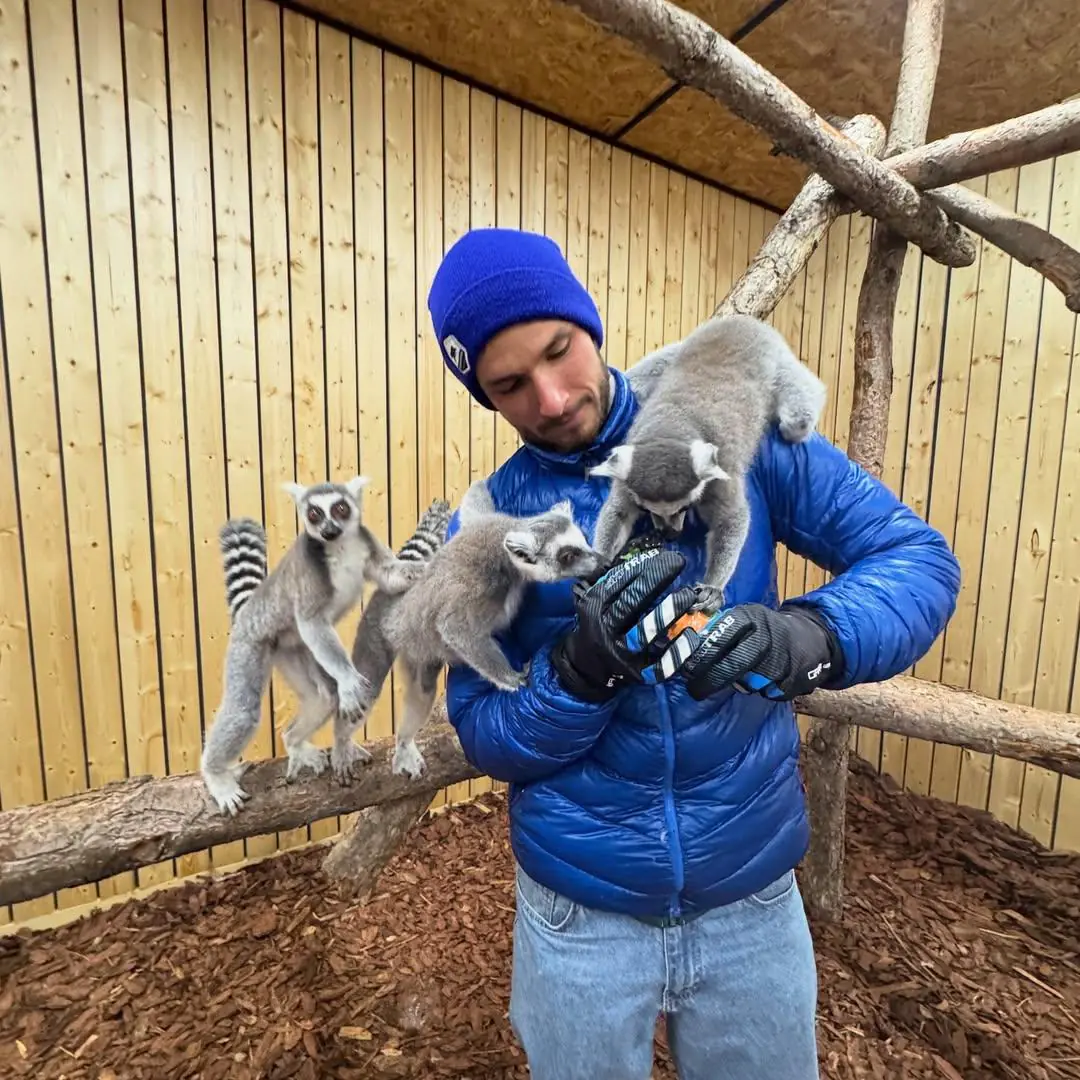
Nikita is feeding the haters
Do others know how you trained? These days it’s not hidden behind an Iron Curtain. Your Telegram channel is mostly for Russian-speaking fans, right?
— I share my preparation and will keep sharing — it’s all publicly available. But simply copying it is very difficult. Training is made up of nuances; repeating exactly the same thing wouldn’t be right.
You weren’t going there for Samsungs — everyone knew what it was really about. How do you feel about this media attitude, both from compatriots and from the IOC toward neutral athletes? I know about the cost of participation and how ypu paid for the neutral license out of your own pocket — but how do you personally experience that?
— I take it calmly. The more we are restricted and discriminated against, the more it fires us up and makes us want to prove that nothing can stop us from winning.
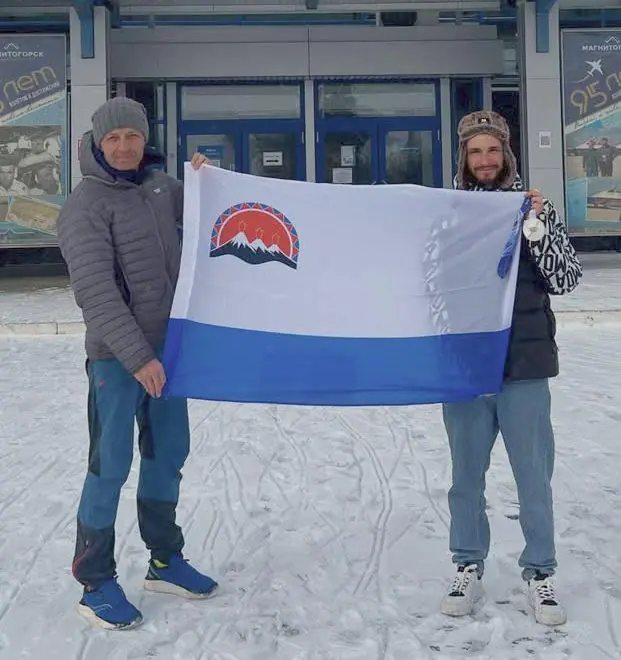
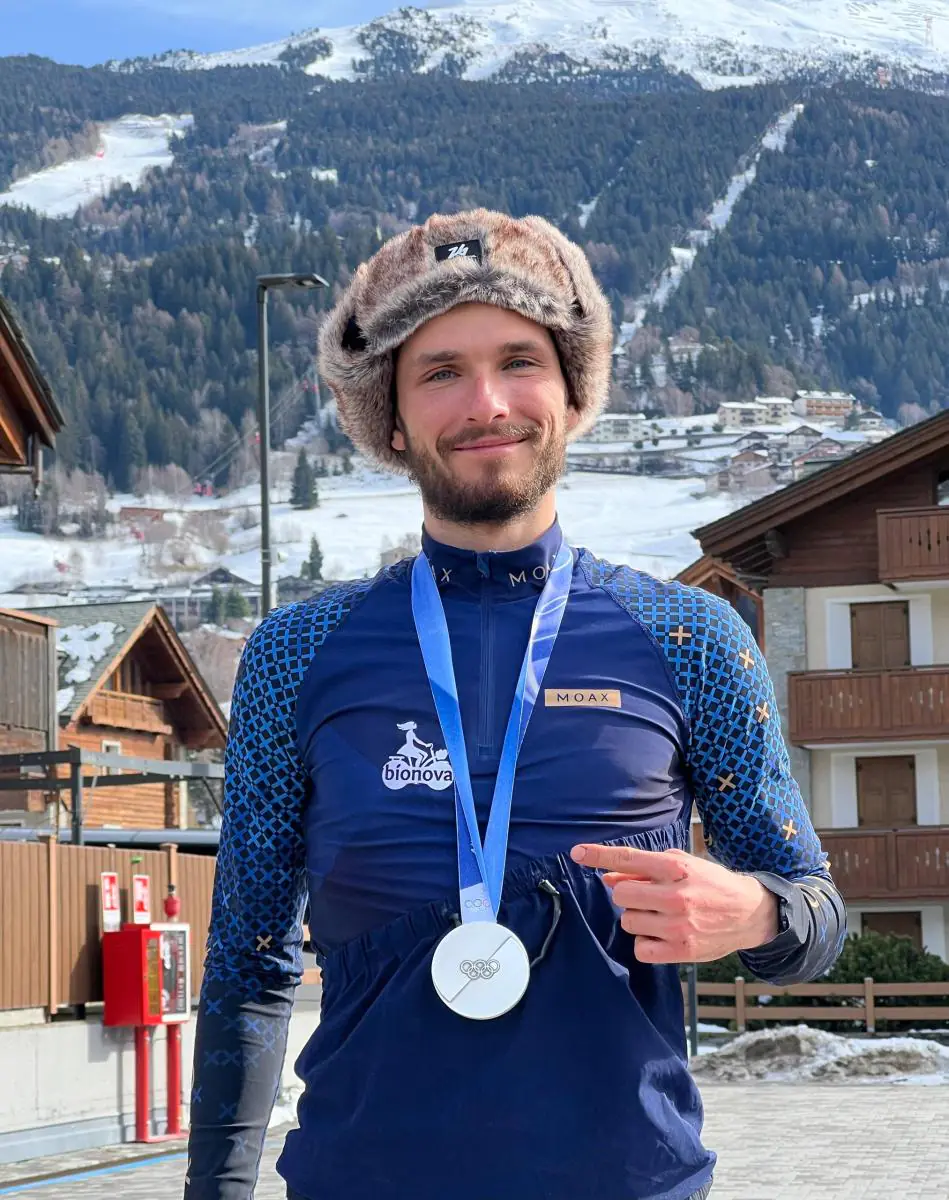
With his dad Alexey Filippov after the Olympics
You weren’t exactly a dark horse among those in the know, but overall, maybe the lack of huge expectations helped you to focus? It will probably be different at the next Olympics…
— I don’t think it will change much. I went in as a favorite; people expected medals from me. There was pressure. Everyone was saying, “he’s our main hope.”
What did your father say first after the race? And what guidance did he give you before the start?
— Before the start: just do your thing, rely on adrenaline, trust your instincts. After the finish, we called each other —he congratulated me, “Yeah, well done, you did your job!” He was really happy, of course.
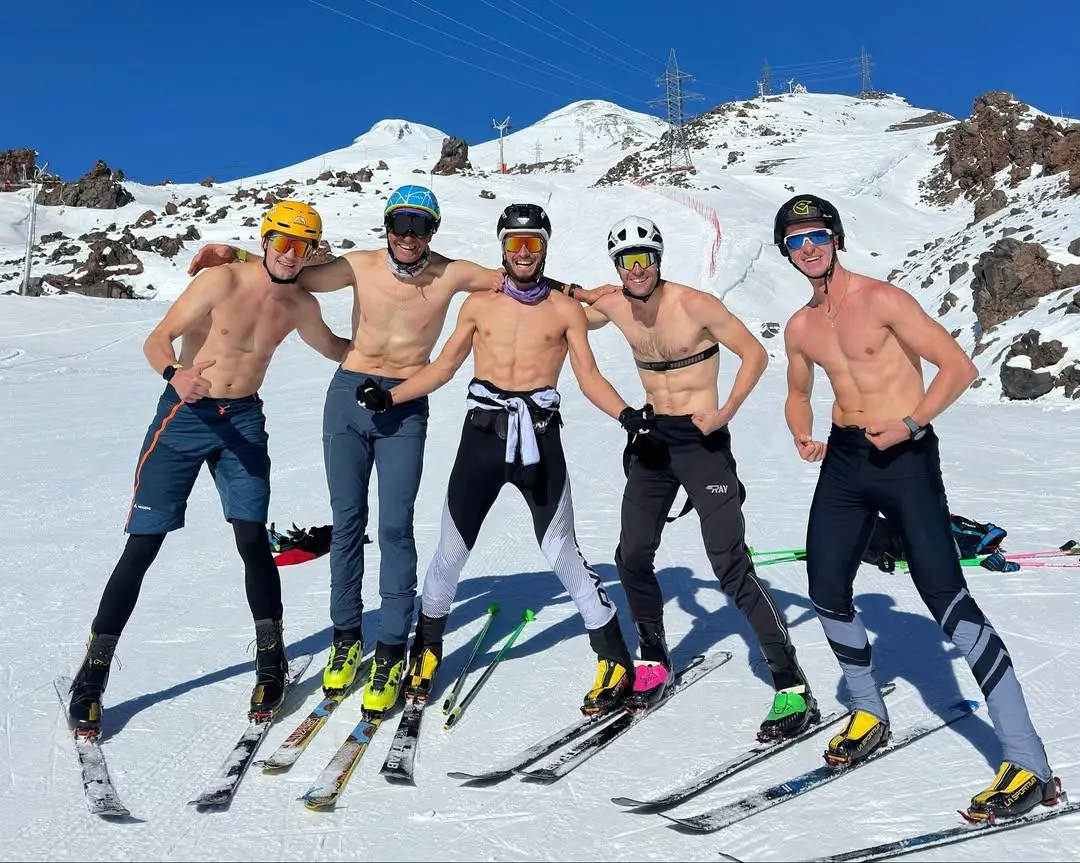
Faint-hearted ladies, you'd better scroll quickly
About your team — let’s name everyone who contributed to the real result, who was with you and supported you. This is historically significant.
— Before the Olympics and throughout the season, there were many people by my side without whom this result simply wouldn’t have happened. First and foremost, Andrey Fyodorov — he prepared my skis and trained with me up until the Olympics. It’s an enormous support — when a person is not just a service guy, but also a partner in the training.
Vlad Andreev handled all the organizational and paperwork matters, the managerial side — it’s a huge part of the work that usually goes unseen, but without it, it’s impossible to prepare and compete calmly. Ashot Malhasyan — our masseur — was accredited and helped directly at the Olympics, which is also a very important part of recovery and preparation between races.
And of course, the guys I’ve trained with all these years. Summer, autumn, training camps — alone, it’s very hard to stay motivated. Training alone is really tough. With friends, it’s always easier, and no one lets you slack off. We constantly live at the camps with Pasha Yakimov. Sasha Antonov spent a lot of time by my side this year — during training, interval checks, sometimes even overtaking me — he didn’t let me relax at all. Daniil Slushkin also helped, both during training and outside of it. To all my friends who were there this year — huge thanks. You really helped.
Next month—what are you up to, if it’s not a secret? Maybe lying low in Bruges to stay out of trouble?
— I’ve already raced the Russian Championship — glad I got to the start and won. My mindset after the Olympics was obviously very different, not the same intensity, but it was still important to race.
Next up is the European Championship in Azerbaijan. The French probably won’t come because of the geopolitical situation, so there will be slightly fewer top competitors. That’s not great. On one hand, it makes the competition easier; on the other, the European Championship should have all the strongest athletes, especially the French. Max Drion says he’s already preparing for the running season— says he’s done with skimo, but I have differnet opinion.
If you’ve trained so much over summer and autumn for the winter season, and you’ve reached your best form — you have to enjoy it: race the season, win, place high, earn, stay visible in the media. There’s no point just stopping at your peak.
After the season, you can finally relax and recharge. Maybe in Kamchatka. =)
Телеграм-канал @mountainrace!
Актуальные новости трейлраннинга и скайраннинга, обзоры, интервью, блоги
Подпишись!
Актуальные новости трейлраннинга и скайраннинга, обзоры, интервью, блоги
Подпишись!

Редактор и со-основатель проекта Mountain-race.ru.
Бегаю трейлы, скайраннинг и пишу об этих видах спорта с 2012 года.
www.instagram.com/aivakin
Актуальные новости


23 февраля
Результаты забега Ladoga Winter Trail 2026

